Understanding roulette bets is fundamental for anyone looking to engage with the game, whether as a player or as a content creator explaining its mechanics. The distinction between various bet types directly impacts potential payouts, risk levels, and overall game strategy. This guide breaks down the core categories of roulette wagers, detailing what each bet entails, its typical payout, and how it fits into the broader game structure. The goal is to provide a clear, actionable overview, enabling a more informed approach to roulette.
Inside Bets: High Risk, High Reward
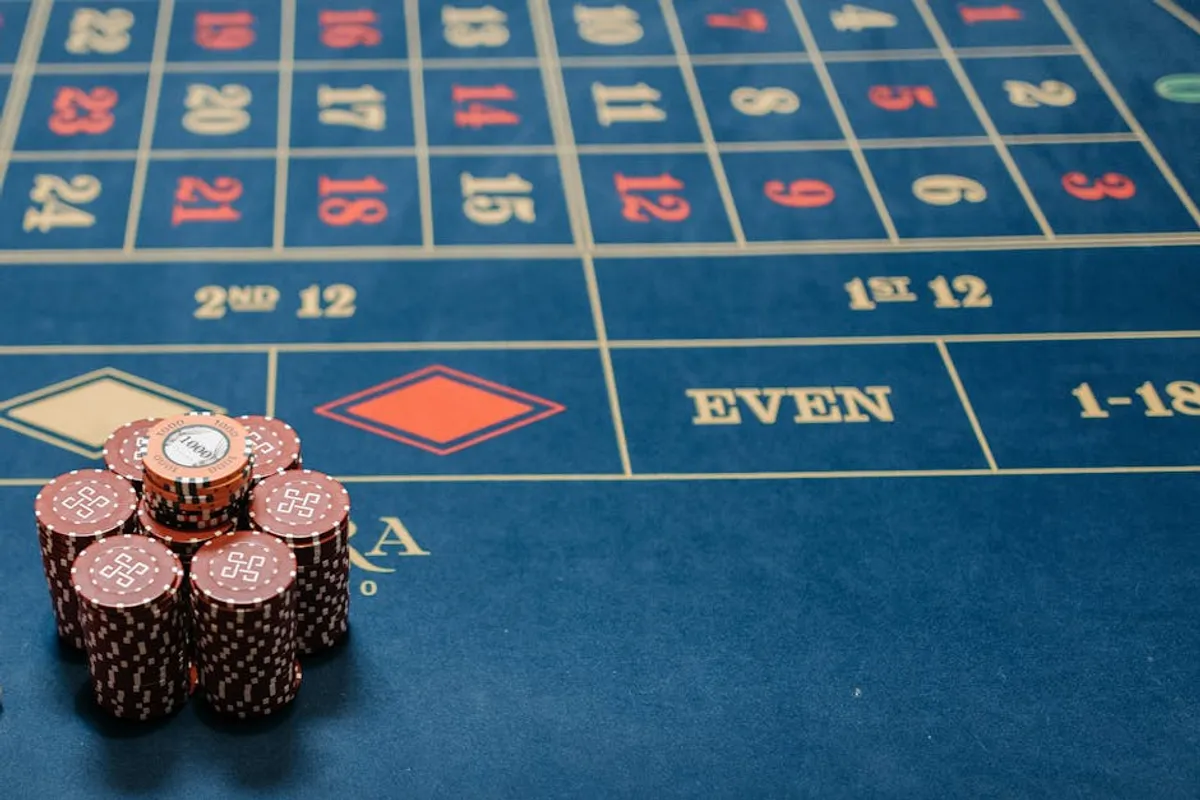
Inside bets are placed directly on the numbered grid of the roulette table. These wagers cover fewer numbers, leading to lower probabilities of winning but significantly higher payouts. They appeal to players seeking substantial returns from a single spin.
Specific Inside Bet Types
- Straight Up (Single Number)
Description: A bet placed on any single number, including 0 and 00 (in American roulette). The chip is placed entirely within the box of the chosen number.
Payout: 35 to 1.
Consideration: This bet offers the highest payout in roulette due to its low probability of hitting. It's a high-volatility option, suitable for those targeting a large win. - Split Bet (Two Numbers)
Description: A bet on two adjacent numbers, either vertically or horizontally. The chip is placed on the line dividing the two numbers.
Payout: 17 to 1.
Consideration: Covers twice the numbers of a Straight Up bet, proportionally reducing the payout but increasing the chance of winning. It balances risk and reward more than a single number bet. - Street Bet (Three Numbers)
Description: A bet on three numbers in a single horizontal row. The chip is placed on the outer edge of the number at the beginning of the row.
Payout: 11 to 1.
Consideration: This bet increases coverage to three numbers, offering a moderate payout for a relatively small section of the wheel. - Corner Bet (Four Numbers)
Description: A bet on four numbers that meet at a single corner. The chip is placed on the common corner shared by the four numbers.
Payout: 8 to 1.
Consideration: Covers a square block of four numbers, providing a decent chance of winning with an 8 to 1 return. It's a popular choice for those looking for slightly broader coverage than a Street bet. - Six Line Bet (Double Street)
Description: A bet on two adjacent horizontal rows, covering a total of six numbers. The chip is placed on the outer edge where the two rows intersect.
Payout: 5 to 1.
Consideration: This bet covers a significant portion of the numbered grid (six numbers), offering a higher probability of winning with a still respectable payout. - Trio Bet (Three Numbers including Zero)
Description: A bet on 0, 1, and 2, or 0, 2, and 3 (European roulette), or 0, 00, and 2, or 0, 1, and 00 (American roulette). The chip is placed at the intersection of these numbers.
Payout: 11 to 1.
Consideration: Specifically targets the zero pockets and adjacent numbers, providing a Street-bet equivalent payout but with specific number combinations. - Basket Bet (First Four)
Description: Exclusive to European roulette, this bet covers 0, 1, 2, and 3. The chip is placed at the corner shared by 0 and 3.
Payout: 8 to 1.
Consideration: Similar to a Corner bet in payout, but specifically covers the zero and the first three numbers. - Top Line Bet (First Five)
Description: Exclusive to American roulette, this bet covers 0, 00, 1, 2, and 3. The chip is placed on the outer corner shared by 0 and 1.
Payout: 6 to 1.
Consideration: This bet has the highest house edge in American roulette (7.89%) due to its specific combination and payout structure, making it generally less favorable than other bets.
Outside Bets: Lower Risk, Lower Reward
Outside bets are placed on the areas surrounding the numbered grid. These wagers cover larger groups of numbers, resulting in higher probabilities of winning but lower payouts. They are often favored by players who prefer a more conservative approach or want to extend their playing time.
Specific Outside Bet Types
- Red/Black
Description: A bet on whether the winning number will be red or black. The chip is placed on the 'Red' or 'Black' diamond on the table layout.
Payout: 1 to 1 (Even Money).
Consideration: Nearly a 50% chance of winning (excluding the green 0/00 pockets), making it one of the most common and lowest-risk bets. - Odd/Even
Description: A bet on whether the winning number will be odd or even. The chip is placed on the 'Odd' or 'Even' box.
Payout: 1 to 1 (Even Money).
Consideration: Similar to Red/Black, it offers close to a 50% chance of winning, providing consistent, smaller returns. - High/Low (1-18 / 19-36)
Description: A bet on whether the winning number will be in the low range (1-18) or the high range (19-36). The chip is placed on the '1-18' or '19-36' box.
Payout: 1 to 1 (Even Money).
Consideration: Another even-money bet, covering half the numbers (excluding zero), offering high probability and low payout. - Dozens Bet
Description: A bet on one of three groups of twelve numbers: 1st Dozen (1-12), 2nd Dozen (13-24), or 3rd Dozen (25-36). The chip is placed in the corresponding '1st 12', '2nd 12', or '3rd 12' box.
Payout: 2 to 1.
Consideration: Covers one-third of the numbers (excluding zero), providing a higher payout than even-money bets but with a lower probability. - Columns Bet
Description: A bet on one of the three vertical columns of numbers on the layout. The chip is placed at the bottom of the chosen column.
Payout: 2 to 1.
Consideration: Similar to Dozens, it covers twelve numbers (one-third of the board, excluding zero), offering the same 2 to 1 payout.
Pro Tip: Understanding the house edge is crucial. European roulette (single zero) generally offers better odds for players than American roulette (double zero) across most bets. For example, the house edge on even-money bets in European roulette is 2.70%, while in American roulette it's 5.26%.
Strategic Betting Approaches
The choice between inside and outside bets often depends on a player's risk tolerance and desired frequency of wins. Outside bets provide a steadier, albeit smaller, stream of wins, making them suitable for extending playtime or managing a smaller bankroll. Inside bets, while riskier, offer the potential for significant payouts that can quickly increase a bankroll. Many players combine these bet types, using outside bets for consistent small wins and supplementing with occasional inside bets for higher potential returns. For instance, a player might bet on 'Red' and also place a 'Straight Up' bet on a specific red number, hoping for both a small win and a large one.
Maximizing Your Understanding of Roulette Bets
Familiarity with each bet type's mechanics, payouts, and inherent risk is the first step toward informed play. Consider the table type (European vs. American) as it directly impacts the house edge and, consequently, your long-term probability. Experimenting with different bet combinations in a low-stakes or free-play environment can help solidify understanding without financial risk. The goal is not just to know what each bet is, but to comprehend how they interact and contribute to overall game dynamics, allowing for more deliberate and enjoyable engagement with roulette.
Frequently Asked Questions
What is the difference between inside and outside bets?
Inside bets are placed directly on specific numbers or small groups of numbers on the numbered grid, offering higher payouts but lower probability. Outside bets cover larger groups of numbers (like colors, odds/evens, or dozens) and offer lower payouts but higher probability.
Which roulette bet has the highest payout?
The Straight Up bet, placed on a single number, offers the highest payout at 35 to 1.
Are there any roulette bets with a 50% chance of winning?
Bets like Red/Black, Odd/Even, and High/Low (1-18/19-36) offer close to a 50% chance of winning, but never exactly 50% due to the presence of the green 0 and 00 pockets, which result in a house edge.
Is European or American roulette better for players?
European roulette is generally considered better for players because it has only a single zero (0) pocket, resulting in a lower house edge (2.70%) compared to American roulette, which has both a single zero (0) and a double zero (00) pocket, leading to a higher house edge (5.26%).